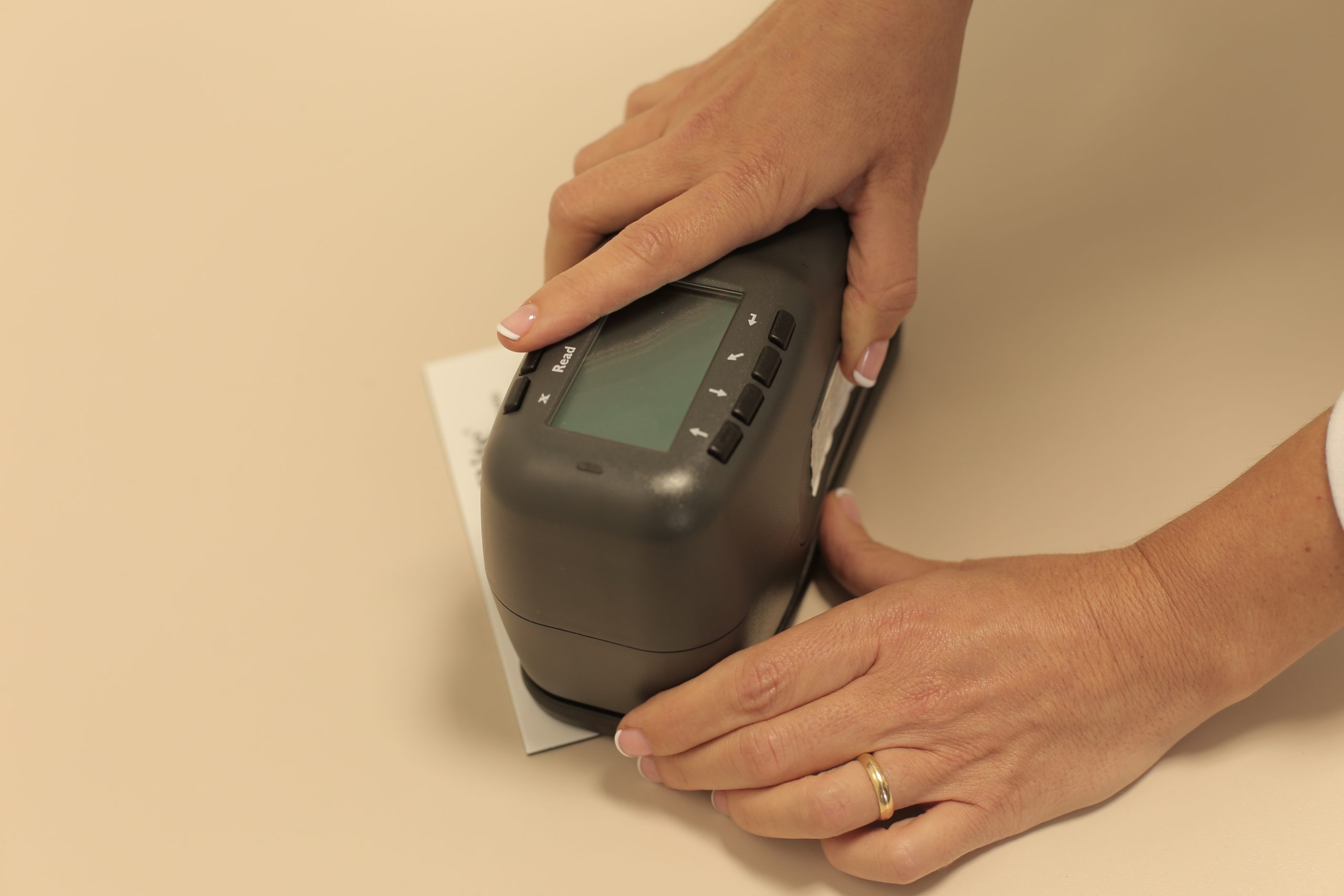
CMYK densitometer calibrations
On-site or laboratory calibration, with a personalized and flexible service. Delivery time: 5 days.
What do we calibrate?
Calibration of CMYK densitometers and spectrodensitometers:
- DensitometersFor these devices, Eyco performs:
ENAC accredited calibration service
We perform calibration of the measurement accuracy of the CMYK values
Determination of the repeatability of the equipment.
Calibration for a condition: Status A, E, I or T.
- SpectrodensitometersFor this type of equipment we perform:
ENAC accredited calibration service.
We perform calibration of the accuracy of color coordinate measurements.
Calibration of measurement accuracy in color differences.
Calibration of the measurement accuracy of CMYK values.
Determination of the repeatability of the equipment.
Calibration for a measurement condition by choosing: coordinates (CIELab*, Yxy), an illuminant (A, C, D50, D65), an observer (2º, 10º) and a status (A, E, M, T)
Densitometers and Spectrodensitometers
Densitometers evaluate color using the CMYK system. They are widely used equipment in the printing and graphic arts industry.
They work similarly to the colorimeters For measuring chromaticity coordinates, densitometers measure the result of the interaction of radiation (light/illuminant) with an object, as detected by a detector (observer). Reflection densitometers evaluate the light reflected by the sample, substrate, or paper being measured.
To measure optical density, it is necessary to know the measurement geometry (the angle of incidence and reflection of the light), the type of light (the illuminant), and the observer.
Geometry
Densitometers illuminate the sample from an angle of 45º and measure the light reflected at 0º.
Illuminant
The illuminant is the type of light falling on the sample whose color is being measured. It is a spectral distribution curve of the light sources. Specifically, in the graphic arts industry, it is common to work with D50 and D65.
Observer
To detect and measure color, an observer is always necessary. Therefore, there are different types of observers standardized by the CIEEach of these represents a different field of view. Furthermore, the CIE classifies 2° and 10° observers. Although the 10° observer is the most commonly used, the choice between one or the other depends on the type of industrial application and the organization's criteria.
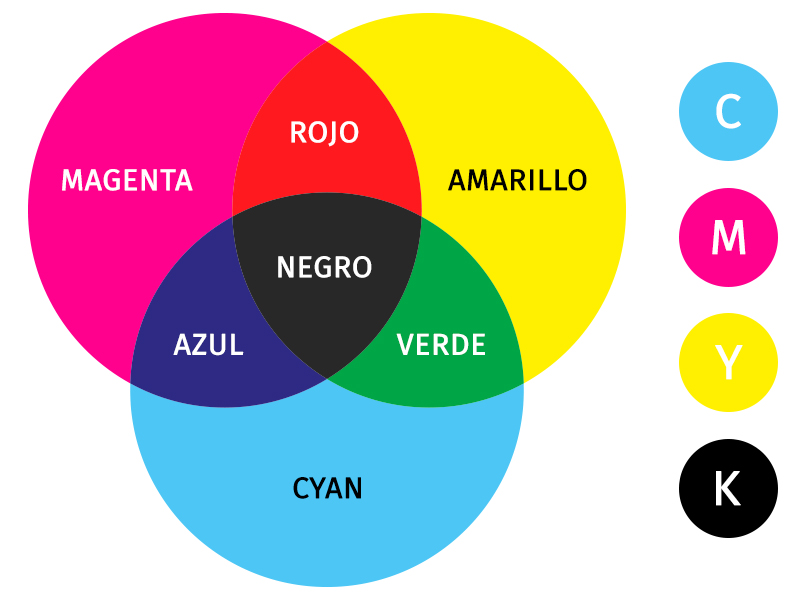
Response of the densitometers
The conditions for taking optical density measurements are specified in various standards. Densitometers can measure under the following conditions, which we detail below.
Status A
NAPM IT2.18:0, Densitometer Response. This standard is accepted for reflectance densitometers in the measurement of color photographs. It defines the response function for measuring photographic products, such as photographic prints, 35mm slides, and transparencies.
Status E
Densitometer response, an accepted standard in Europe for color reflectance densitometers. Specifically, it defines the response function of the most common broadband densitometers used in European printing companies.
Status I
Densitometer response known as narrowband. Specifically, it defines the response function of narrowband densitometers used in North America.
Status T
Response of a broadband color reflectance densitometer. This is the accepted standard in the US for this type of densitometer. Specifically, it defines the response function for measuring press proofs, photomechanical proofs, and printed sheets. It also applies to other graphic arts materials measured using broadband equipment. Response of densitometers used in North American graphic arts companies.
In addition to optical density measurement, spectrodensitometers also measure CIELab* color coordinates.
Eyco has the ability to calibrate densitometers in CMYK values under the chromatic conditions that the company needs, as well as in chromatic coordinates.
Technical scope for the calibration of densitometers
| Measurement range Range | Uncertainty (*) -- | Standard/Procedure -- | Instruments to be calibrated Instruments | Dress Code |
|---|---|---|---|---|
| Optical density (0°:45a) | ||||
| 0 ≤ OD < 0.6 0.6 ≤ OD ≤ 2 | 0.030 0.10 | PT42 Procedure internal based on: ISO 5-3 | Reflection densitometers Spectrodensitometers | A,I |
The result
Once your equipment has been calibrated by Eyco's expert staff, you will receive a Calibration Certificate backed by accreditation. ENAC. Said Certificate includes the complete identification of your equipment, the procedure that the laboratory has followed to carry out the calibration and the result of the same.
The calibration result is a correction along with its uncertainty. This correction is the difference between the reference standard value and the value measured by your instrument. The CMYK densitometer Calibration Certificate issued by Eyco provides the CMYK correction for three standards with different optical density values. Additionally, if the instrument also measures chromaticity coordinates, the certificate will include the chromaticity coordinate correction for six standards and the correction for color difference.
From the correction values and their uncertainty, you can establish the acceptance and rejection values of the equipment.
In addition, together with your equipment, you will receive a calibration label with the certificate number, the identification of the equipment and the date of calibration.