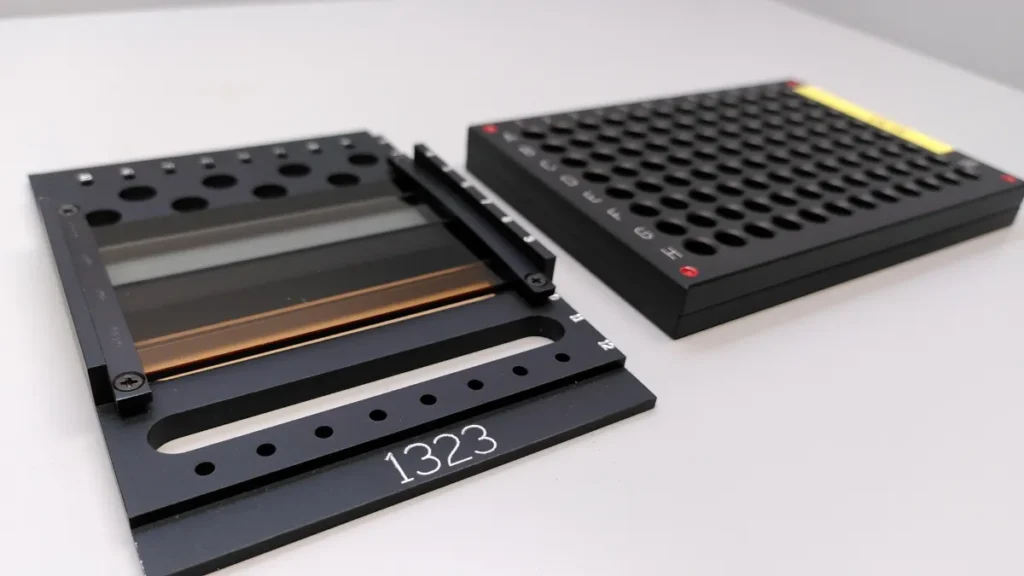
En Eyco We have recently performed the calibration of ELISA microplates for a laboratory in Brunei. This center tests samples geared towards the animal health, food safety and international trade.
Animal health laboratories must guarantee traceability and metrological accuracy in their equipment to avoid false positives or negatives that could compromise, for example, livestock or public health. Below, we analyze what this technology entails and the importance of calibration.
What is the ELISA technique and what are its applications?
La ELISA technique (Enzyme-Linked Immunosorbent AssayThe rRNA assay is an enzyme-linked immunosorbent assay (ELISA) based on antigen-antibody interaction. It allows for the quantification and detection of substances such as hormones, bacterial or viral antigens, or specific antibodies in complex samples.
Its practical applications cover sectors such as:
- Animal health: Early diagnosis of epizootic diseases and serological control on farms.
- Food safety: Detection of hidden allergens, toxins and drug residues in food intended for consumption and foreign trade.
- Biomedical and pharmaceutical research: Clinical trials and quality control in drug production.
What is an ELISA microplate reader?
For the quantitative measurement of samples, the following is used: ELISA microplate readerThis instrument is a spectrophotometer specifically designed to measure the absorbance of the wells that make up the ELISA plates.
Since the operating principle is based on the intensity of the color generated by the enzymatic reaction, any optical deviation in the instrument or irregularity in the ELISA plates directly alters the analytical result.
Why is it important to have an accredited laboratory for ELISA plate calibration?
Relying on an accredited calibration laboratory provides key strategic advantages:
- What are the advantages of having an accredited calibration laboratory? It guarantees the highest metrological rigor, traceability to national or international standards, and strict compliance with international quality standards such as ISO / IEC 17025.
- Why are calibration certificates accredited in different countries valid? Thanks to international mutual recognition agreements signed by accreditation bodies such as ENAC (National Accreditation Entity), certificates issued under accreditation are automatically recognized and accepted in a large number of countries worldwide. This greatly facilitates international trade and the acceptance of analytical results in foreign countries.