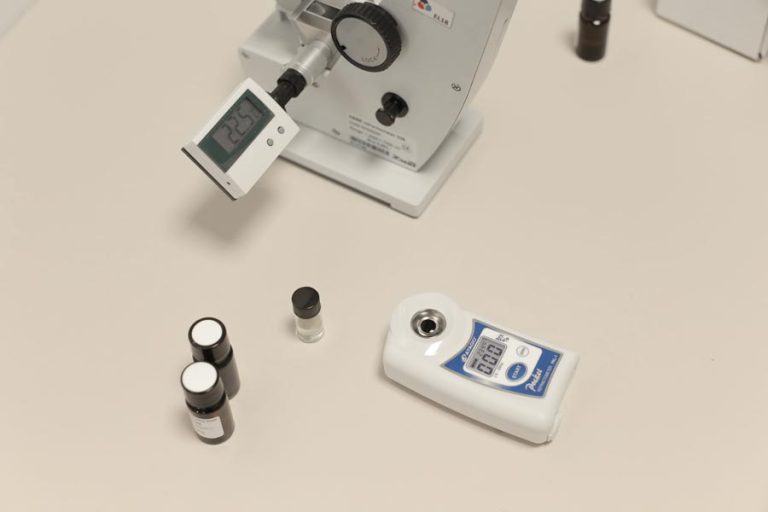
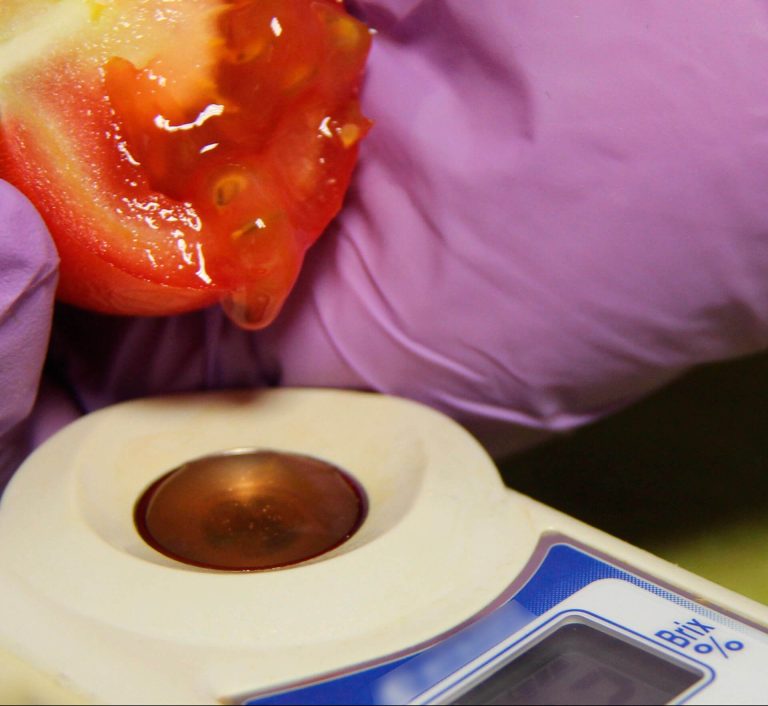
Refractometry is a fundamental tool in oenology for controlling sugar in must.
Quality control in the wine industry begins in the vineyard and extends throughout the entire production process. Measuring the sugar concentration in the grape must is one of the most critical parameters, as it directly influences the potential alcohol content of the final wine.
To perform this measurement reliably, it is essential to use the refractometryThis is an analytical technique based on the refractive index. In this publication, we will delve into the principles of this technique and explore the international recommendations. OIML 124 Rand we will describe the different types of refractometers which are included in the document OIML/TC17/SC2/N3 to ensure accuracy in measurements.
- What is refractometry and why is it fundamental in oenology?
- Measuring sugar in must and determining the alcoholic strength of wine
- Types of refractometers
- Reference conditions for wort measurement: The OIML standard in refractometry
- From light to sugar in the must: the conversion of the Refractive Index
- The importance of temperature correction in wort measurement
- Beyond sugar: Spectrophotometry for wine color
- Commitment to metrological precision
What is refractometry and why is it fundamental in oenology?
La refractometry It is an analytical technique that is based on the physical phenomenon of light refraction to determine the composition of a substance. The central principle is the refractive index, a quantity that measures the speed of light in a medium relative to its speed in a vacuum. This value varies according to the density of the medium, making it a direct indicator of the concentration of dissolved solids in a liquid.
The The uses of refractometers and related scales are varied.In the wine sector, refractometers are instruments used to measure the amount of sugar in grape must and are regulated by international standards, such as the OIML 124 R, which guarantee the uniformity and reliability of the measurements.
Measuring sugar in must and determining the alcoholic strength of wine
The main application of this technique in the wine sector is the measurement of sugar dough in the grape must before fermentation. The sugar content is a key predictor of potential alcoholic strength of wine, since fermentation transforms sugar into alcohol. According to studies, between 16,5 and 17,5 g/L of sugar are needed to obtain 1% alcohol by volume, although this value can vary depending on the grape and the production method.
The precise measurement of refractive index It allows winemakers to make informed decisions about the optimal harvest time and winemaking process. To do this, various scales are used, each with its specific purpose:
- Brix degrees (ºBx): It is used in oenology to estimate the total content of soluble solids, mainly sugars, of the must.
- Baumé (ºBe): A density-based scale that estimates the sugar content and, therefore, the alcoholic potential of the wine.
- Oechsle (ºOe): This scale, used mainly in Germany and Switzerland, measures the ripeness of the grape based on the density of the must, directly related to the amount of sugar.
- KMW/Babo: Commonly used in Austria, it also measures the sugar level in the must.
- Potential alcohol (% V/V): Scale that allows estimating the percentage of alcohol by volume that will be obtained after fermentation.
These scales demonstrate the versatility of the Refractometerswhich are also applied in other industries such as food (measuring fructose or glucose) and the automotive (measuring the concentration of antifreeze and battery acids). To learn more about the various applications, we invite you to read our blog post on the uses of refractometers and related scales.
Types of refractometers
La International Organization of Legal Metrology (OIML), In OIML 124 Rclassifies the Refractometers of must in three main types, each designed for different needs:
- Type I (automatic): These instruments feature automatic temperature correction, digital display, and are designed for fast and accurate measurements.
- Type II: Similar to Type I, they have automatic temperature correction and a digital display.
- Type III (manuals): These are traditional refractometers with an analog display through an eyepiece. For their proper functioning, they utilize the phenomenon of light refraction and are equipped with a built-in thermometer to allow for temperature corrections.
OIML/TC17/SC2/N3: Automated refractometers
The document OIML/TC17/SC2/N3, «Automated Refractometers. Methods and Means of Verification", focuses on the Refractometers automated.
The OIML document defines an automatic working refractometer as an instrument to which the test sample is supplied manually or automatically. These instruments may be equipped with an integrated microprocessor that displays the measurement data, and may also be connected to secondary display devices, printers, or other auxiliary devices, such as a computer.
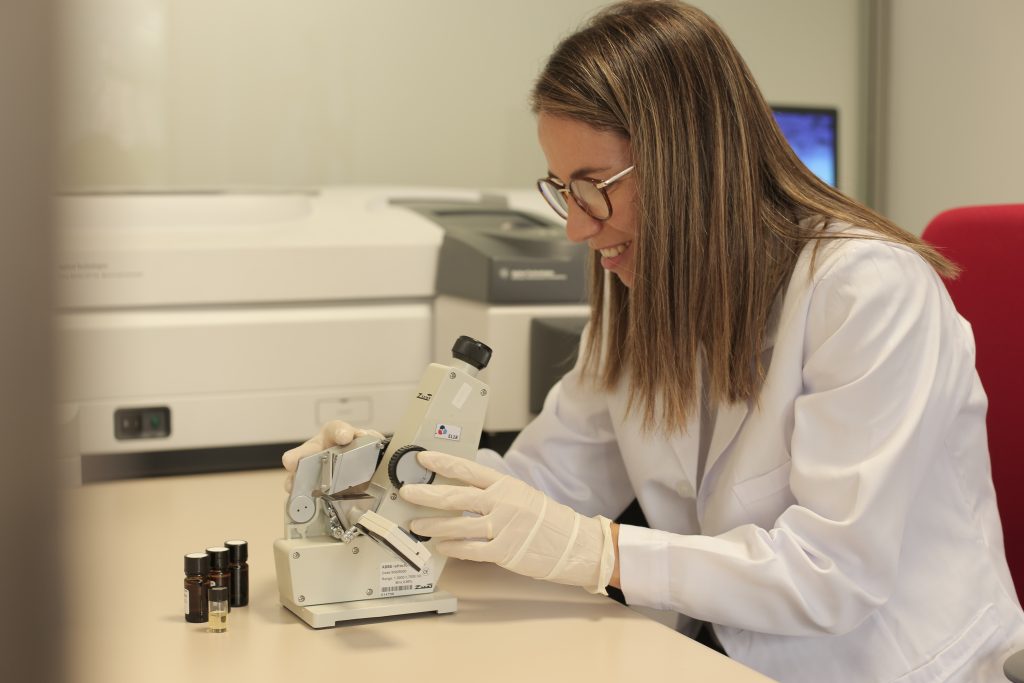
Abbe refractometer calibration
The document classifies refractometers according to their measurement method. refractive index in different types:
- Pulfrich refractometers: They measure the angle of deviation of a beam of light as it passes through a system of prisms.
- TIR (Total Internal Reflection) refractometers: They measure the refractive index using the total internal reflection method. These, in turn, are subdivided into:
- Pulfrich refractometers (TIR): They measure the critical emergence angle of the light beam.
- Abbe refractometers: They measure the refractive index using a measuring prism with a 60° angle. They are also equipped with an illuminating prism and an additional system of compensating prisms that allow measurement in white light (daylight or electric light).
- Dipping refractometers: They are based on the phenomenon of total internal reflection that occurs when an optical element (such as an Abbe prism or a sapphire rod) is immersed in the liquid to be analyzed. Only the rays that strike at an angle greater than the critical angle are totally reflected, and the resulting signal on the photodiode allows the refractive index of the liquid to be calculated.
- BTIR (Broken Total Internal Reflection) refractometers: They measure the refractive index based on the energy and polarization patterns of the reflected light.
Furthermore, the document establishes specific metrological and technical requirements for these instruments. These include the obligation for manufacturers to indicate the name, brand, type, and serial number on the instrument. It also details the methods for verifying and calibrating refractometers.
Reference conditions for wort measurement: The OIML standard in refractometry
In refractometry In oenological terms, the accuracy of a measurement depends on its performance under standardized reference conditionsThe document of the OIML R 124 It establishes a set of fixed values for influencing factors that guarantee the validity of the comparison of results in the measurement of the must.
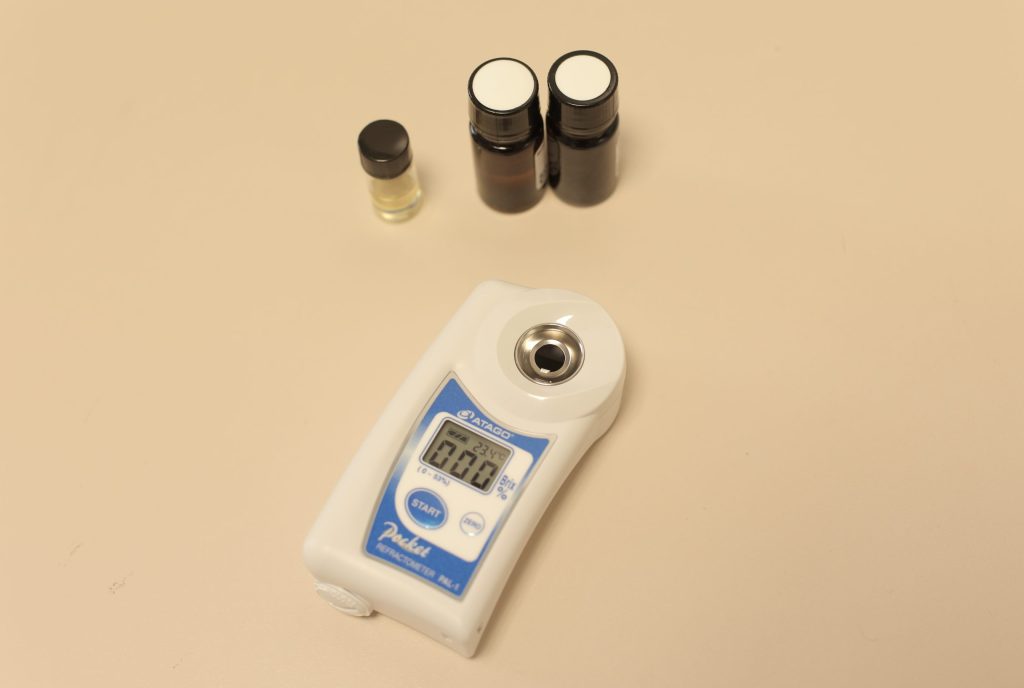
Refractometer
The key reference conditions for accurate measurement are:
- Temperature: The reference temperature is 20 °C. This is crucial, as the refractive index is highly sensitive to temperature variations.
- Atmospheric pressure: 101,325 kPa.
- RH: 50%.
- CO content2: 0,03% by volume.
- Wavelength: The sodium D line (589 nm) is used as a reference.
From light to sugar in the must: the conversion of the Refractive Index
La refractometry It is the scientific technique that translates a physical property (the refractive index) into a chemical quantity of great importance in oenology: sugar concentration. The document OIML R 124 establishes an empirical relationship for calculating the sugar content (ρB) in grams per liter (g/L) of grape must, using the refractive index (n).
The formulas used for this conversion are:
- ρB=6844(n−1,3358) for n≤1,3706
- ρB=6712(n−1,3351) for n>1,3706
These relationships, established by P. Jeaulmes through an exhaustive analysis of musts, demonstrate the proportionality between sugar concentration and the alcoholic potential of wine. Understanding this relationship is fundamental for decision-making in the winemaking process and for quality control in wineries.
The importance of temperature correction in wort measurement
As we have mentioned, temperature is a critical variable. To ensure the accuracy of measurements outside of reference conditions, OIML R 124 requires that the Refractometers They are equipped with a temperature correction device. This mechanism ensures that the instrument reading is equivalent to what would be obtained at the reference temperature of 20 °C.
Corrections are handled differently depending on the type of refractometer:
- Type I and II (digital) refractometers: Temperature correction is automatic. The instrument adjusts the reading in real time within an operating range of 5 °C to 40 °C.
- Type III refractometers (manual): The correction is performed manually. These instruments must incorporate a thermometer and, optionally, a secondary scale to apply the correction to the analog reading.
Meeting these OIML requirements is vital to avoid errors in must sugar measurements, which could seriously affect the final quality of the wine.
Beyond sugar: Spectrophotometry for wine color
Wine analysis goes beyond sugar content. A critical factor for quality and consumer perception is the wine's color, which acts as an indicator of its origin, aging process, and state of preservation. Unlike sugars, color is measured using another fundamental analytical technique: UV-Vis spectrophotometryThis technique measures the light absorbance of wine at different wavelengths. For example, absorbance in the visible spectrum (such as 420 nm, 520 nm, and 620 nm) allows winemakers to determine the intensity and hue of the color. This data is crucial for monitoring the wine's evolution during fermentation and aging. For more details on this topic, please see our publication on [the topic]. wine color.
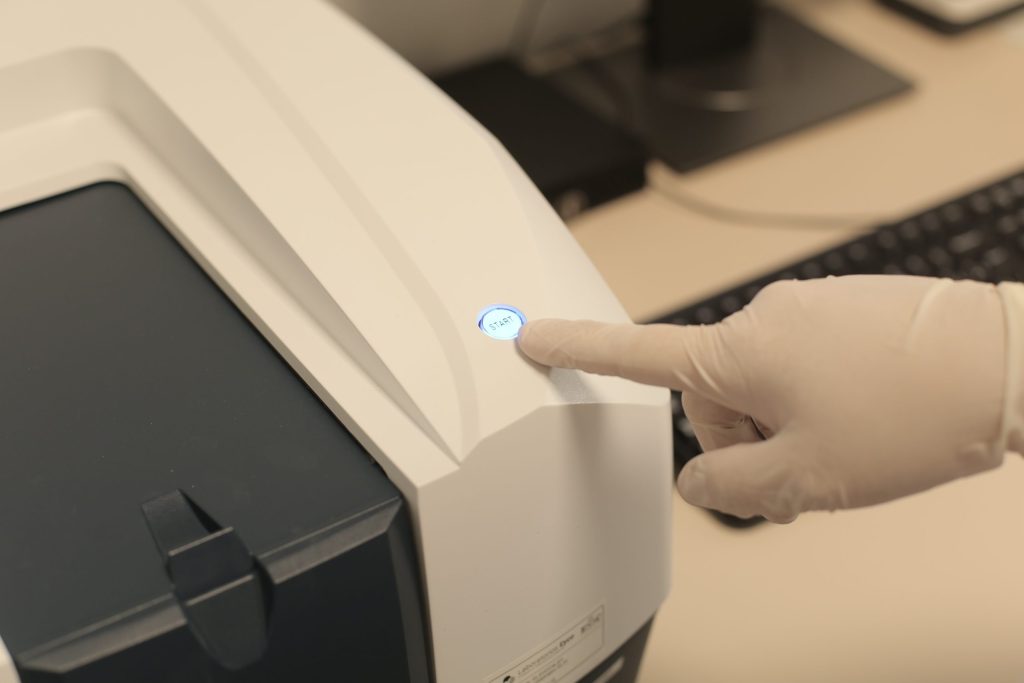
UV-Visible Spectrophotometer
Commitment to metrological precision
At Eyco, we offer calibration services for the wine industry. Refractometers to UV-Vis spectrophotometersOur catalog covers the calibration of key instruments for analyzing essential wine parameters. In addition, we offer ENAC accreditation ENAC, guarantee that our services meet the highest internationally recognized standards of quality and accuracy.
FAQ
What is refractometry used for in the wine industry?
La refractometry It is primarily used to determine the sugar concentration in grape must. By measuring the refractive index, winemakers can estimate the degree of grape ripeness and predict the potential alcoholic strength that the wine will have after fermentation.
What is the difference between the Brix, Baumé, and Oechsle scales?
Although they all measure sugar density, they are used according to the region or tradition:
- Brix degrees: They represent the percentage of sucrose by weight (very common in Spain and America).
- Baumé degrees: Related to the density of the must; traditionally one degree Baumé is approximately equivalent to 1% potential alcohol.
- Oechsle degrees: Used mainly in Germany and Switzerland to measure the density of the must relative to water.
How does temperature affect measurements taken with a refractometer?
The refractive index is extremely sensitive to temperature variations. To obtain accurate results, it is essential to perform a temperature correction (normally referenced to 20°C) or use refractometers with automatic temperature compensation (ATC) to avoid errors in calculating the sugar concentration.
What regulations govern the use of refractometers in wine?
At the international level, the recommendation OIML R 124 It establishes the technical and metrological requirements for refractometers used in determining the sugar content in grape musts, ensuring uniformity and accuracy in commercial and control measurements.
Why is accredited calibration of refractometers necessary?
La accredited calibration Laboratory services like Eyco guarantee the metrological traceability of measurements. In the wine sector, this is vital to ensure that decisions about harvest time or the winemaking process are based on real data, complying with quality standards and audits in the food industry.