ASTM D1003 establishes two methods for measuring haze and transmittance in transparent plastics. What are the differences between the two?
The measurement of luminous transmittance and haze in transparent materials is essential in sectors such as the packaging and plastics industry. The standard ASTM D1003 It is the reference standard for evaluating these properties, allowing measurement with both spectrophotometers As with hazemetersHowever, there are key differences between the two methods that can influence the results obtained.
In this post, we compare both methods and discuss the measuring equipment used in each.
ASTM D1003: Two methods, different results
La turbidity measurement It is a key aspect in materials analysis, as it allows for the evaluation of scattered light in a medium. There are different methods for quantifying this phenomenon, each with specific characteristics that make them more suitable depending on the type of sample and the level of precision required.
The Norma ASTM D1003 defines two methods for measuring the haze or turbidity:
- Method A (Hazemeter): It measures turbidity using a directed (not diffuse) light beam, which strikes the sample and detects the stray light at an angle of 2,5°. This approach offers increased sensitivity and accuracy for materials with low scattering, allowing for a more detailed assessment of turbidity.
- Method B (Spectrophotometer): It uses an integrating sphere to measure transmitted light and scattering from the sample. This method is ideal for general evaluations and provides reproducible results, but may be less sensitive to small variations in light scattering.
Key differences between hazemeter and spectrophotometer
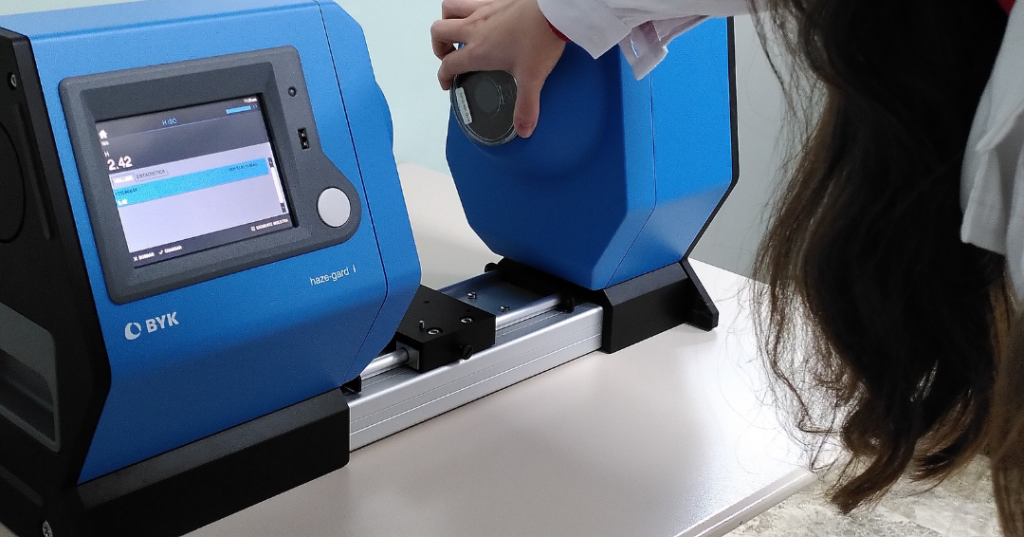
What is a hazmeter?
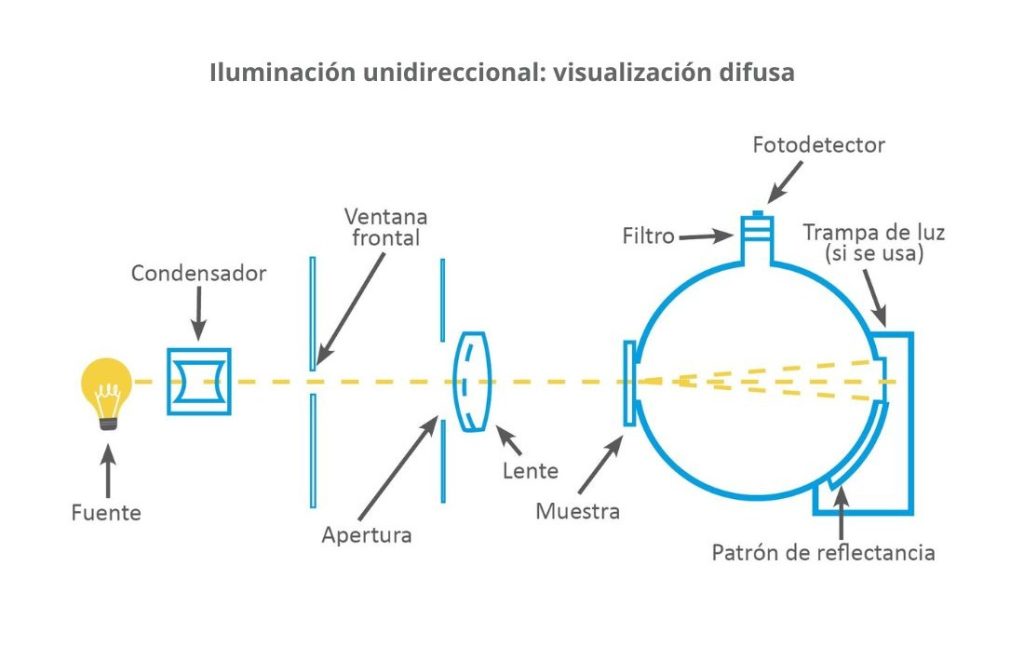
Un hazemeter It is an optical instrument designed for measure the haze (turbidity) of transparent and translucent materials according to the Standard ASTM D1003It works by projecting a collimated beam of light onto the sample and detecting the amount of light that deviates at a specific angle, usually 2,5° with respect to the incident beam.

This device provides accurate measurements of the degree of light scattering caused by internal or surface imperfections in the material, allowing for the evaluation of its transparency and optical quality. It is commonly used in the plastics, glass, optical film, and coatings industries, where clarity and color control are key. haze are critical factors in production.
Below is a schematic of a hazemeter:
What is an integrating sphere spectrophotometer?
Un spectrophotometer with integrating sphere, according to the Standard ASTM D1003, is an optical instrument that measures the amount of light transmitted and scattered by a transparent or translucent sample.
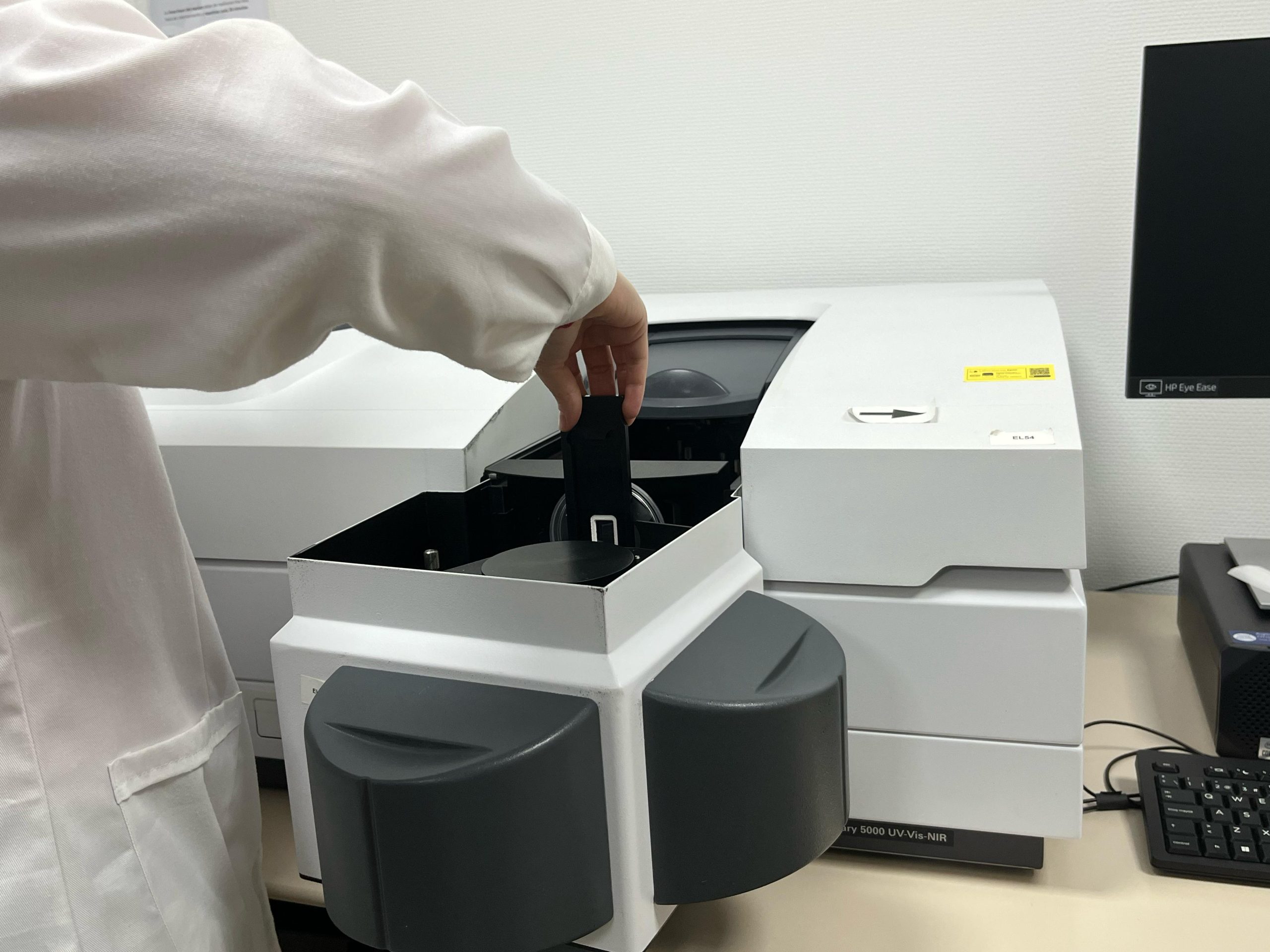
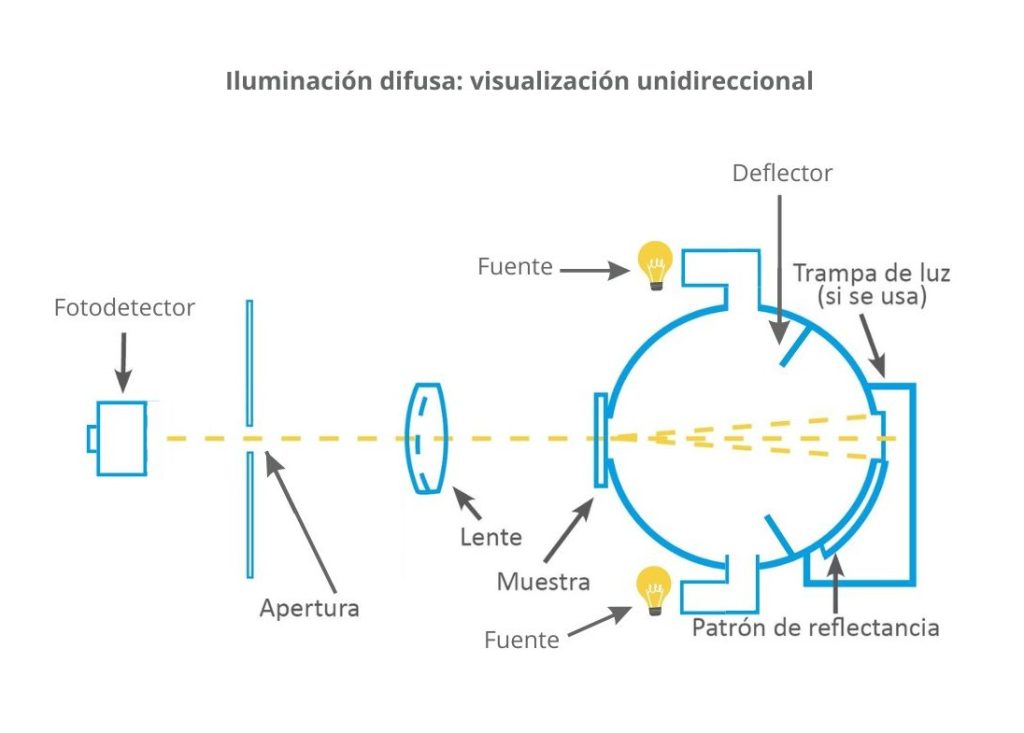
It uses an integrating sphere, a device with a highly reflective internal surface that collects and redistributes light evenly, allowing measurement of both total and diffuse transmittance. This method provides a comprehensive haze assessment by capturing light scattered in all directions.
Below is a schematic of a spectrophotometer:
Differences between both teams
There are multiple technical differences between these two instruments, so the choice of measurement method depends on the type of material and the accuracy required for the tests. The main differences are presented below:
- Measurement Geometry: El spectrophotometer with integrating sphere measures the scattered light in all directions, while the hazemeter focuses the deflected light at a specific angle (usually 2,5°). This geometry allows the Hazemeters detect small optical imperfections better, while spectrophotometers can average out dispersion.
- Sensitivity Range: El The hazemeter has greater sensitivity for materials with low levels of hazeThis is due to its ability to measure stray light at small angles without the influence of background stray light.
- Accuracy and Reproducibility: The spectrophotometer offers greater reproducibility in general measurements due to its light integration. However, the hazemeter provides greater accuracy in highly transparent materials, as it directly measures the angular deviation of transmitted light.
- Measurement Time: The hazemeter is usually faster for repetitive testing due to its straightforward setup, while the spectrophotometer may require more time for light integration.
- Angular Specificity: The hazemeter measures light deflected at an angle of 2,5° from the incident beam, while the spectrophotometer measures light scattered over a wider range of directions, which can lead to differences in the interpretation of the haze, especially in materials with surface textures.
- Wavelength: The spectrophotometer generally measures in a spectral range of 400 to 700 nm, while the hazemeter works with standardized white light (CIE (illuminant C or D65). This difference can affect the perception of the haze depending on the spectral composition of the material.
- Sample Size and Preparation: Samples must be of a minimum size to completely cover the aperture of the integrating sphere or the hazemeter window. Rough samples or those with non-uniform surfaces may show greater discrepancies between the two methods due to how they scatter light.
- Environmental Conditions: Temperature and humidity can affect measurements, especially with sensitive plastic materials. Because the hazemeter measures in a closed environment, it may be less sensitive to these environmental variations compared to a spectrophotometer.
Differences in testing performance
Carrying out tests under the Standard ASTM D1003 varies depending on the method used:
Method A (Hazemeter):
- The sample is placed in the path of the light beam and the light deflected at 2,5° is measured.
- It is faster and more accurate for transparent and low-density materials. haze.
- Less affected by surface imperfections that can influence spectrophotometer measurements.

Method B (Spectrophotometer):
- The sample is placed in front of the integrating sphere and the total transmitted light and scattered light are measured.
- It requires greater care in the alignment and calibration of the equipment to avoid integration errors.

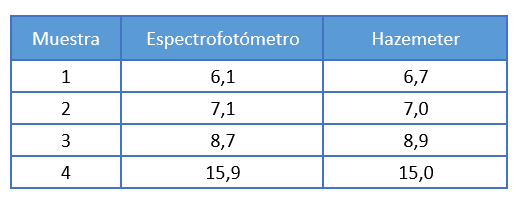
Test results. Measurements obtained with a hazemeter and an integrating sphere spectrophotometer
The results of measurements taken in a series of tests are presented below. In these tests, the haze was determined using a hazemeter and an integrating sphere spectrophotometer on the same samples.
Calibrations and tests at Eycos Laboratories
Laboratorios Eyco It has both a hazemeter as with a spectrophotometer with integrating sphere. This allows us to perform measurement tests in accordance with the Standard ASTM D1003 using either of the two devices. This translates into flexibility to adapt to our customers' specific needs, offering options that best fit the required materials and applications.
In addition, we offer calibration services for companies using this equipment, ensuring that they operate in accordance with the highest international standards.
With the ability to work with both methods and equipment, Eyco Laboratories provides complete and precise solutions for the measurement and calibration of haze meters and spectrophotometers. Contact us to learn how we can help you optimize quality control in your production processes.
FAQ
What is haze or turbidity in transparent materials?
El haze or turbidity It is the scattering of light as it passes through a transparent material. This scattering occurs due to small internal or surface imperfections that deflect the light and reduce the visual clarity of the material, creating a slightly whitish or diffused appearance.
What does the ASTM D1003 standard measure?
La ASTM D1003 standard defines the methods for determining the haze and total light transmittance in transparent materials, especially plastics. These parameters allow us to evaluate the optical quality of the material and its ability to transmit light without distortion.
What instruments are used to measure haze?
Two main types of equipment are used to measure haze:
- Hazemeters, specifically designed to measure turbidity and transmittance.
- Spectrophotometers with integrating sphere, which capture the light transmitted and scattered in all directions.
Both methods are covered by the ASTM D1003 standard and offer different measurement approaches depending on the type of material being analyzed.
What is the difference between a hazemeter and an integrating sphere spectrophotometer?
El hazemeter It measures the light deflected at a specific angle relative to the incident beam, allowing the detection of minute variations in turbidity in highly transparent materials. In contrast, the spectrophotometer with integrating sphere It collects transmitted and scattered light in all directions within a reflective sphere, providing a more comprehensive measurement of light transmittance and scattering.
Why is it important to calibrate equipment that measures haze and transmittance?
La calibration of hazemeters and spectrophotometers It is essential to guarantee reliable and comparable results. Properly calibrated equipment ensures that turbidity and transmittance measurements are accurate. accurate, traceable and reproducible, key aspects in quality control processes and in compliance with technical standards such as ASTM D1003.