Color and Gloss calibrations
On-site or laboratory calibration, with a personalized and flexible service. Delivery time: 5 days.
Calibration consists of establishing, under specific conditions, the relationship between the values measured by a piece of equipment and the reference values traceable to recognized standards.
This relationship allows the client to evaluate the instrument's performance and ensure the validity of its measurements. It is performed on colorimeters, spectrophotometers, glossmeters, densitometers, multi-angle spectrophotometers, and color and gloss standards, guaranteeing the metrological traceability of the results.
Color Calibration
Color calibration consists of determining, under controlled conditions of geometry, illuminant and observer, the relationship between the instrument indications (such as coordinates) CIELab, Yxy, color differences ΔE, DO…) and reference values traceable to calibrated standards.
Brightness Calibration
Gloss calibration involves determining, under controlled conditions and according to standardized geometries of 20°, 60°, 85°, 75°, and 45°, the relationship between the gloss values provided by the instrument and reference values expressed in Gloss units, traceable to calibrated standards. This procedure allows for the evaluation of the glossmeter's response in measuring specular reflectance, ensuring the accuracy, repeatability, and traceability of the results.
What equipment do we calibrate?
Spectrophotometers and colorimeters
These devices are used to perform measurements of Lab* coordinates and to calculate the color differences between a pattern and a sample, DE*; or, in sectors such as signage, these devices are often used to perform measurements in Yxy coordinates.
Densitometers and Spectrodensitometers
In the graphic arts industry and printing services, densitometers are essential tools for color control, especially in the CMYK system. Reflectance densitometers are devices that measure the radiation reflected by the printed material, thus evaluating the optical density of the color.
Multi-angle spectrophotometers
To evaluate colors with metallic, pearlescent, or iridescent effects, multi-angle spectrophotometers are used. These devices measure color from different viewing angles, which is essential in sectors such as automotive and cosmetics, where color varies depending on the light and viewing angle.
Glossmeters
These devices are designed to measure the gloss of a surface by evaluating the light reflected in a specular direction. They are used to objectively control the appearance of materials in industries such as automotive, paint, varnish, and plastics manufacturing, where gloss level can be a decisive quality criterion.
Gloss Standards
Gloss standards are used to verify, intercompare, and calibrate gloss meters, ensuring accurate measurements. They are essential in sectors such as plastics, chemicals, and textiles, where gloss directly influences product perception.
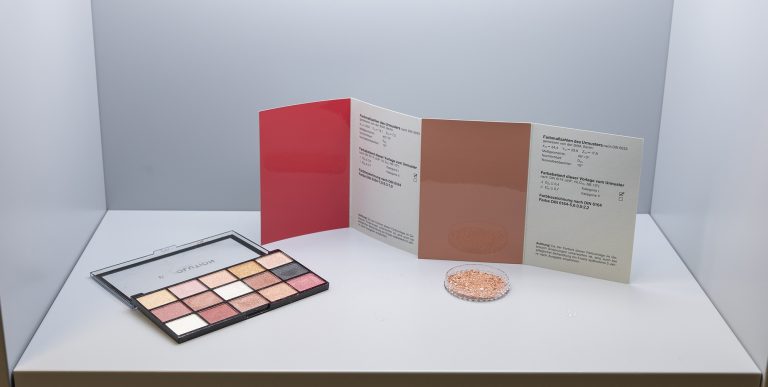
Color Standards
Color standards are commonly used to verify equipment, perform internal calibrations, or compare results between devices. They are calibrated under the same geometry, illuminant, and observer conditions as the equipment, in CIELab* or Yxy coordinates.
Why Is This Important?
Color and brightness calibrations are essential to ensure accurate, traceable, and reproducible measurements aligned with international standards. They allow for the correction of deviations caused by equipment wear, ensuring reliability in sectors where quality control is critical. Furthermore, they reduce errors, minimize costs associated with production corrections, and guarantee regulatory compliance, optimizing operational efficiency and competitiveness.
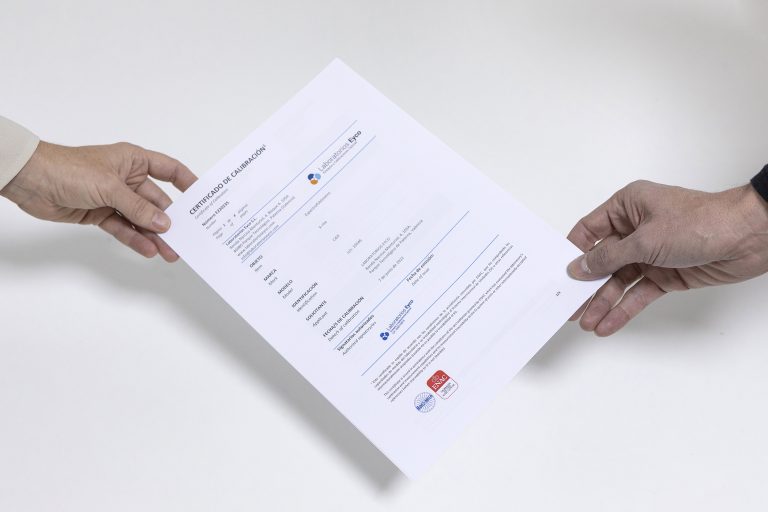
The certificate
Once your equipment has been calibrated by Eyco's expert staff, you will receive a Calibration Certificate backed by accreditation. ENAC. Said Certificate includes the complete identification of your equipment, the procedure that the laboratory has followed to carry out the calibration and the result of the same.