How to determine the g-Factorto and Fc in shutters, glass and solar protection devices combined with glazing?
When assessing energy efficiency in buildings, it is essential to consider openings, windows and doors, as well as the glass for construction already the covering elements such as lattices, blinds or curtainsThe characteristics related to thermal and luminous comfort of these elements are determined through tests adjusted to standards.
Among the values determined in laboratory tests are the gto and the Fc . These values are related to the thermal and luminous comfort of the users.
So, for example, companies like Vertisol use optical properties tests of the technical fabrics which they develop. These laboratory tests determine the properties of the vinyl shade fabrics they produce, designed to maintain the interior temperature of the rooms where they are used, while also providing greater visual comfort. This leads to a direct reduction in energy consumption, meaning improved energy efficiency in buildings and, therefore, a minimized environmental impact.
Index of content hub
How to measure the impact of sunlight?
We know that part of the light that reaches any material or surface passes through this material, another part is reflected, and, finally, the rest of the light is absorbed. Then, the phenomena of transmission, reflection and absorption of light occur.
The impact of sunlight can be evaluated by spectrophotometric tests. In this way, the electromagnetic radiation absorbed, transmitted or reflected by a material can be analyzed for each wavelength.
By applying these calculations and evaluations to materials, it can be developed fabrics that improve thermal quality and visual comfort inside buildings. An example of this is the company Vertisol, which has developed a range of technical fabrics for sustainable projects, Contract fabrics, whose thermal properties are listed in international software databases such as IDA ESBO, Edibatec or BIM, for the calculation of energy savings. Among these fabrics are, for example, the SRC fabrics (Solar Reflective Coating), which incorporate a reflective layer that helps improve the thermal performance of the product while avoiding glare.
Transmittance
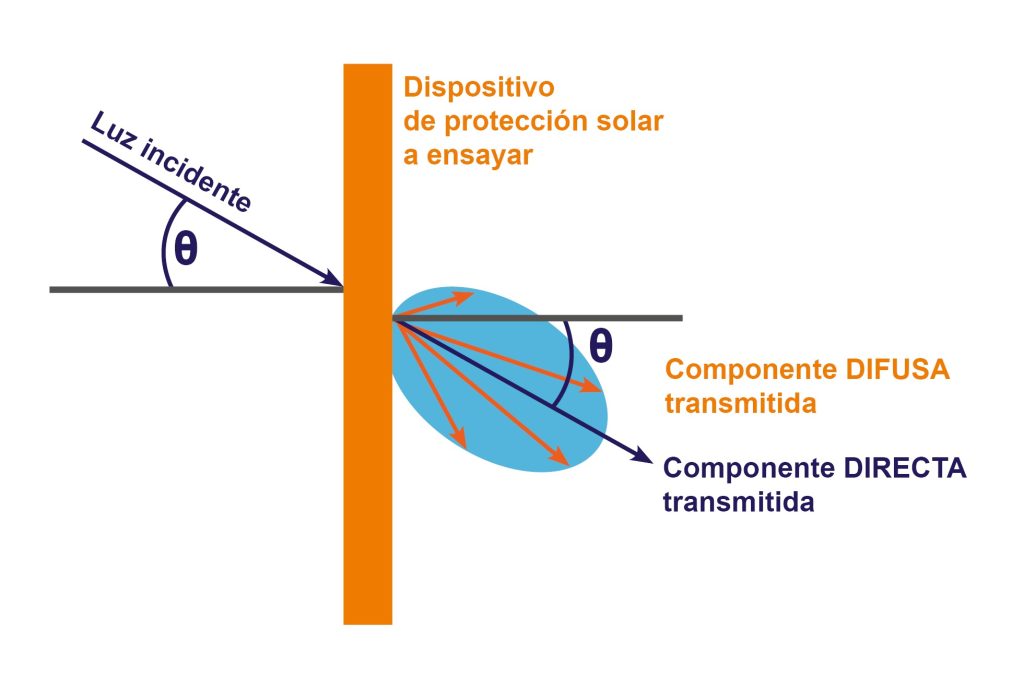
First, transmittance is the fraction or percentage of incident radiation that passes through a sample for given wavelengths.
In this way, by measuring the transmittance we can know if a material transmits UV or not, the transparency in the visible spectrum, the color -when it comes to translucent materials-, etc.
Depending on how the transmittance is evaluated, a distinction can be made between regular and diffuse transmittance. Thus, in transparent media -which allow clear vision through them-, regular or direct transmission occurs. For its part, when the incident beam is diffused and transmitted in different directions, diffuse transmission occurs.
Reflectance
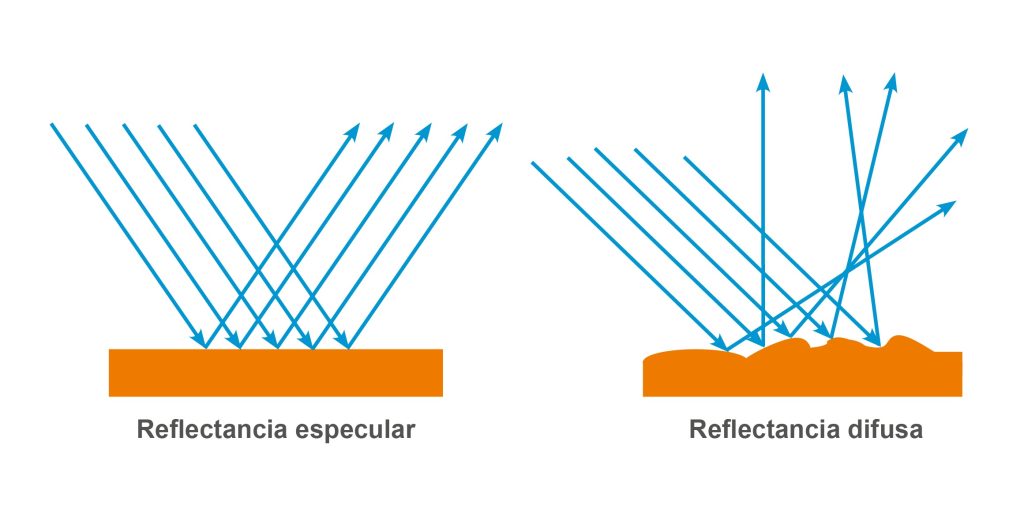
Second, the reflectance It is the proportion of incident radiation reflected by a sample or material for certain wavelengths.
Reflectance can be diffuse or specular. Thus, while diffuse reflectance occurs when light is reflected in multiple directions, specular reflectance occurs when light is reflected in the same direction as incident light.
Absorbance
Finally, the absorbance It is the amount of radiation that a material absorbs.
However, absorbance is also sometimes referred to as transmittance optical density, or just like optical density (OD).
What is the gto and the Fc?
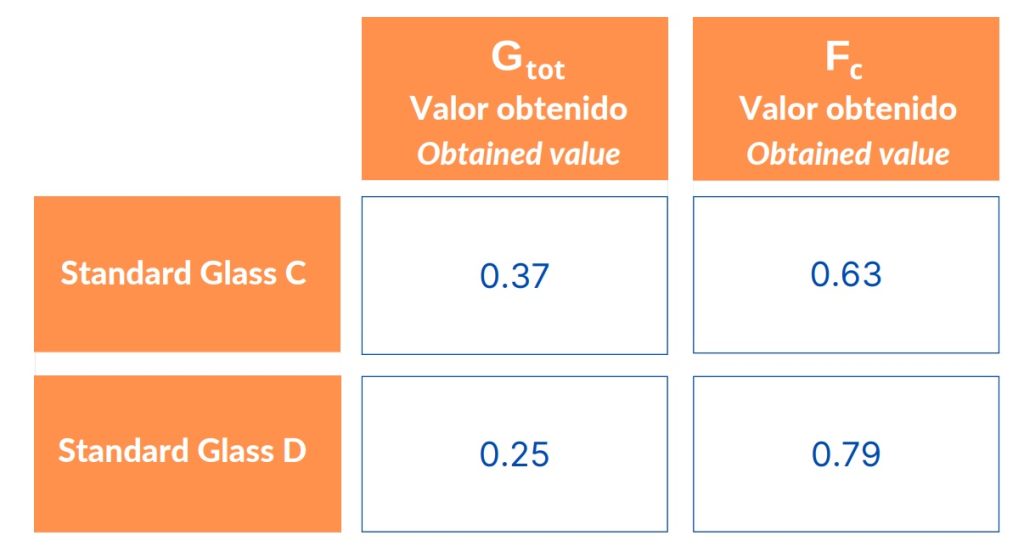
The value Gto is the total solar energy transmittance for a glazing in combination with an external sun protection device, internal or integrated, as specified by the standard UNE-EN 52022-1: 2017. In this way, the smaller the value gto , the lower the increase in temperature due to the incidence of sunlight.
On the other hand, the value Fc describes the efficiency of sun protection in intercepting incident solar radiation in relation to the sun protection used and the type of glazing. So, the lower the energy class, the higher the efficiency and therefore the energy savings.
Thus, if the value Fc is used properly, it will minimize energy consumption for air conditioning.
Applicable regulations
There are different applicable regulations related to thermal comfort in blinds, glass and solar protection devices with glazing. Specifically, the following should be noted:
- UNE-EN ISO 52022-1: 2017. Energetic efficiency of the buildings. Thermal, solar and daylight properties of building components and elements. Part 1: Simplified method for calculating solar and daylight characteristics of sun protection devices combined with glazing.
- Other standards that are applicable in this type of test are:
- UNE-EN 14500: 2021. Blinds and shutters. Thermal and light comfort. Test and calculation methods.
- UNE-EN 410. Glass for building. Determination of the luminous and solar characteristics of the glazing.
UNE-EN ISO 52022-1:2017
The UNE-EN ISO 52022, deals with the energy efficiency of buildings, and, more specifically, with the thermal, solar and daylight properties of building components and their elements.
Specifically, the first part of the standard (part 1) determines the simplified method of calculating the solar and daylight characteristics of solar protection devices combined with glazing.
This document can be applied when the solar transmittance and solar reflectance The sun protection devices fall within the following ranges:
0≤τe,B ≤ 0,5 and 0,1 ≤ ρe,B ≤ 0,8
being τe,B the solar transmittanceand ρe,B the reflectance of the sun protection device side against incident radiation.
The results that are extracted from the standard are the total solar energy transmittance, the total direct solar transmittance and the total light transmittance for a glazing in combination with a solar protection device.
The standard establishes calculation procedures to obtain the total solar energy transmittance for different cases. In this way, it defines procedures both for external sun protection devices, as well as for internal devices and integrated devices. In this post we will stop only at the internal solar protection devices.
Devices such as curtains, which we place behind the glazing, are considered internal solar protection. The standard proposes a scheme similar to the one that appears in figure 3, on the installation of internal solar protection devices.
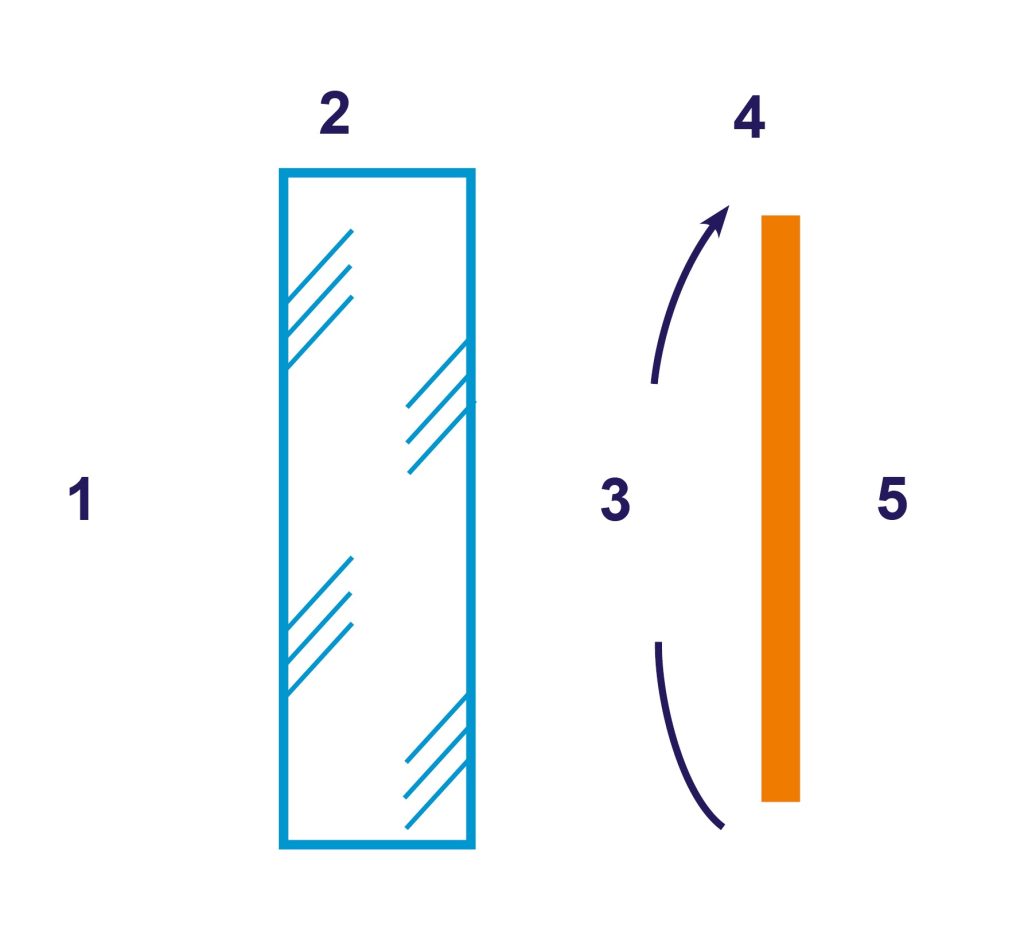
Key:
1 Outside
2 Glazing
3 Air chamber, ventilated inside
4 Sun protection device
5 Interior
In addition, the standard indicates the following formula, which allows calculating the total solar energy transmittance for a glazing and an internal solar protection device:
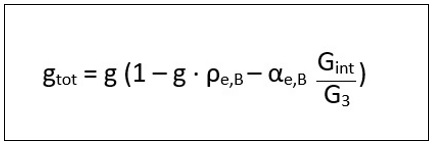
Where:
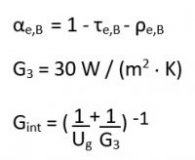
Taking into account that α is the absorbance, G the thermal conductance, Gint the internal thermal conductanceand u g the thermal transmittance.
Other standards
Regarding the UNE-EN 14500, defines the test and calculation methods that are used to establish the reflection and transmission characteristics that must be used to determine the visual and thermal comfort performance classes in external and internal louvers and shutters, as specified in the standard EN 14501: 2021.
Furthermore, the UNE-EN 14500 standard specifies the method for determining the blackout of exterior and interior louvers and blinds, as indicated in the EN 14501:2021 standard.
As regards the standard UNE-EN 410, specifies the methods for determining the luminous and solar characteristics of glazing in buildings. Thus, the standard indicates that these characteristics can serve as a basis for calculations related to lighting, heating and cooling of the premises. In addition, these characteristics allow comparisons to be made between different types of glazing.
Laboratorios Eyco, experts in optical testing
The different tests and trials The tests that can be carried out to evaluate the optical properties of materials and surfaces are determined by the spectral range of the spectrophotometer.
Eyco has spectrophotometers that cover the range that goes from the ultraviolet to the infrared of the electromagnetic spectrum. In this way, our laboratory has the capacity to evaluate the interaction of electromagnetic radiation (reflectance, transmittance and absorbance) in different materials from 200nm to 2500nm.
Eyco adapts to the needs of its clients and carries out tests, standardized or custom designed. Among these tests, there are those carried out to determine the gto and the Fc of blinds, glass and solar protection devices combined with glazing.
FAQ
What is thermal and lighting comfort in buildings?
El thermal and lighting comfort This refers to the optimal environmental conditions within a building that ensure the well-being of its occupants in terms of temperature and natural light. Evaluating this behavior in building envelopes allows for maximizing insulation against summer heat and taking advantage of natural light without glare.
What are the gtot Factor and the Fc Coefficient?
El gtot factor It represents the total solar factor of the combination of glazing and a solar shading device (such as blinds or louvers); it measures the proportion of solar radiation that penetrates a room. Meanwhile, the Coefficient Fc It is the shading or optimization factor that quantifies the effectiveness of said protection compared to glass alone.
How does spectrophotometry help evaluate sun protection devices?
La spectrophotometry Optical spectroscopy is the analytical technique that objectively measures the amount of radiation a material reflects, absorbs, or transmits at different wavelengths. These optical tests provide the fundamental spectral data for transmittance, reflectance, and absorbance required to calculate the overall energy efficiency of the system.
What regulations govern the calculation of thermal and lighting comfort?
The characterization of these construction systems and materials is carried out under strict international regulations, among which stand:
- The UNE-EN ISO 52022-1 for the simplified calculation of the thermal and light properties of solar protection devices combined with glazing.
- The UNE-EN 14500, focused on testing and calculation methods for blinds and shutters.
- The UNE-EN 410, which determines the luminous and solar characteristics of the glazing in the building.
Why perform these optical tests at Eyco?
As a laboratory specializing in the measurement of optical properties, Eyco It offers precise, traceable, and reliable spectrophotometry testing. This allows manufacturers, architects, and specifiers to verify compliance with the Spanish Building Technical Code (CTE), certify the energy efficiency of their building envelopes, and ensure proper thermal and light insulation.