Opacity calibrations
Laboratory calibration, with a personalized and flexible service. Delivery time: 5 days.
Calibration consists of establishing, under specific conditions, the relationship between the values measured by a piece of equipment and the reference values traceable to recognized standards.
This relationship allows the customer to evaluate the instrument's performance and ensure the validity of its measurements. Specifically, opacity calibration focuses on filters for opacimeters. Opacimeters are used to measure gas emissions into the atmosphere, especially from diesel vehicle engines, to ensure environmental control and regulatory compliance.
Opacity Calibration (N) Opacity is an optical property related to the amount of visible light that reaches an instrument's detector after passing through a column of smoke or gas. Specifically, calibration is performed by comparing the opacimeter reading with known spectral opacity values from standard filters, which must be calibrated within the instrument's operating wavelength range (550 nm to 570 nm).
Absorption Coefficient (K) The absorption coefficient (K) is derived from the opacity (N) and the effective optical length (L) of the opacimeter, according to the Lambert-Beer Law. Specifically, calibration allows obtaining the value of the absorption coefficient with its uncertainty, an essential parameter for air quality control.
What equipment do we calibrate?
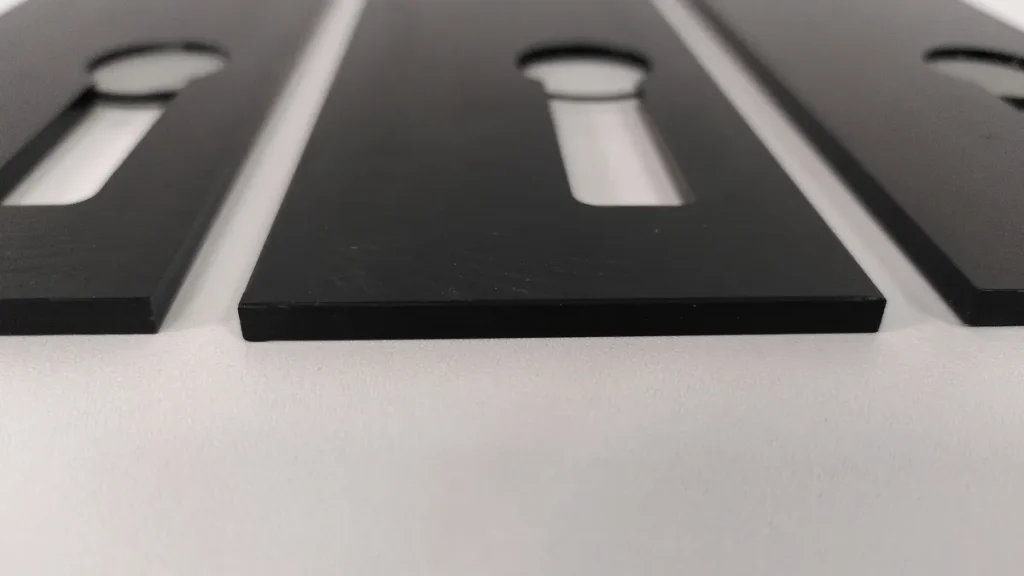
Opacity Filters or Standards To calibrate opacimeters, a set of opacity filters with different values (e.g., 10%, 30%, 50%, and 80%) is required. Specifically, it is crucial that these standard filters be calibrated by an expert laboratory.
Calibration Description Eyco filters offer 2 types of calibration:
- On the one hand, opacity filter calibration in range: Determination of the opacity in the requested range.
- On the other hand, point opacity filter calibration: Determination of opacity at specific point(s) (wavelengths)
In addition, customers can request the calculation of the light absorption coefficient (k) - outside the scope of accreditation.
Why Is This Important?
The calibration of opacimeters and their filters is of vital importance due to its direct impact on legal compliance with gas emissions and on environmental protection.
- Regulatory compliance (MOT): The law requires vehicle inspection centers to use properly calibrated equipment to measure exhaust emissions. Regular calibration ensures compliance with the established emission limits.
- Environmental measure guarantee: Opacity is directly related to the emission of harmful particles. Therefore, ensuring the accuracy of opacimeters is a crucial control for public health and the environment.
- Error prevention: The calibration detects drift and aging of the light source and the opacimeter detector, ensuring that the equipment maintains its accuracy over time.
- Reliability of the absorption coefficient: The accuracy of the opacity measurement is the basis for calculating the absorption coefficient (K), a fundamental parameter in gas analysis. Opacity (N) is defined in terms of transmittance and is related to the amount of light reaching the detector. Specifically, this optical property is evaluated spectrally; that is, the opacity measurement is performed as a function of wavelength.
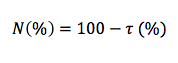
Furthermore, the absorption coefficient (K) is defined by the Lambert-Beer Law, which relates opacity (N) and the effective optical length (L). Specifically, the latter is a characteristic of the opacimeter that depends on the dimensions of each instrument.

Technical scope for the calibration of filters for opacimeters
| Measurement range Range | Uncertainty (*) -- | Standard/Procedure -- | Instruments to be calibrated Instruments | Dress Code |
|---|---|---|---|---|
| OPACITY Opacity | ||||
| 200 nm ≤ λ ≤ 420 nm 0 ≤ N < 70 70 ≤ N < 90 90 ≤ N < 99 99 ≤ N ≤ 100 | 0,0095·(100-N) 0,020·(100-N) 0,045·(100-N) 0,15·(100-N) | PT43 Internal procedure based on ICD 130 | Absorbance filters Density filters neutral Optical filters Microplates | A |
| (420 – 900)nm 99,9% < N ≤ 100% 90% < N ≤ 99,9% 0% ≤ N < 90% | 0,35 (100-N) % 0,090 (100-N) % 0,0070 (100-N) % | PT43 Procedure internal based on CIE 130 | Filters for opacimeters | A |
| (900 -2500)nm 80% < N ≤ 99% 0%≤ N ≤ 80% | 0,025 (100-N) % 0,0070 (100-N) % | PT43 Procedure internal based on CIE 130 | Filters for opacimeters | A |
The result
Once your equipment has been calibrated by Eyco's expert staff, you will receive a Calibration Certificate backed by accreditation. ENAC. Said Certificate includes the complete identification of your equipment, the procedure that the laboratory has followed to carry out the calibration and the result of the same.
Specifically, the calibration result in the case of opacimeter filters is the opacity value for the required wavelengths, along with its expanded uncertainty.
Thus, based on the opacity values and their uncertainty, the company will be able to establish the acceptance and rejection values of the filters.
In addition, along with your filters, you will receive a calibration label with the certificate number, equipment identification and calibration date.