Enjoy the observation of astronomical phenomena in an appropriate and safe way.
Astronomical phenomena such as solar eclipses have aroused the interest and curiosity of human beings throughout history. However, direct observation of the Sun without proper protection can cause serious damage to vision. Therefore, it is highly recommended to use solar observation glasses, which allow you to enjoy this phenomenon without risks to your eyesight.
On the other hand, amateur and professional astronomers use filters that allow the study and detailed observation of celestial bodies and phenomena. Among the characteristics of these filters is the reduction of light pollution and the improvement of contrast.
In this entry we will talk about the observation of solar eclipses, the use of appropriate and safe glasses, and astronomy filters, specifically the importance of their calibration and testing.
Solar eclipses. Observation
What are solar eclipses and what are their phases?
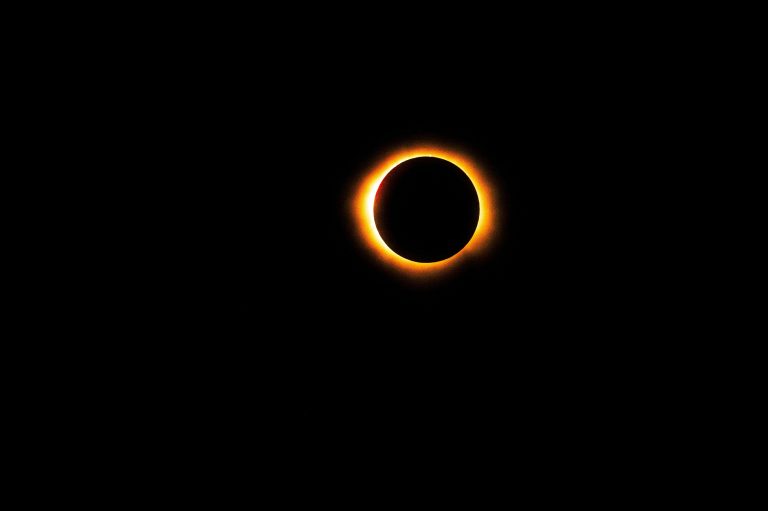
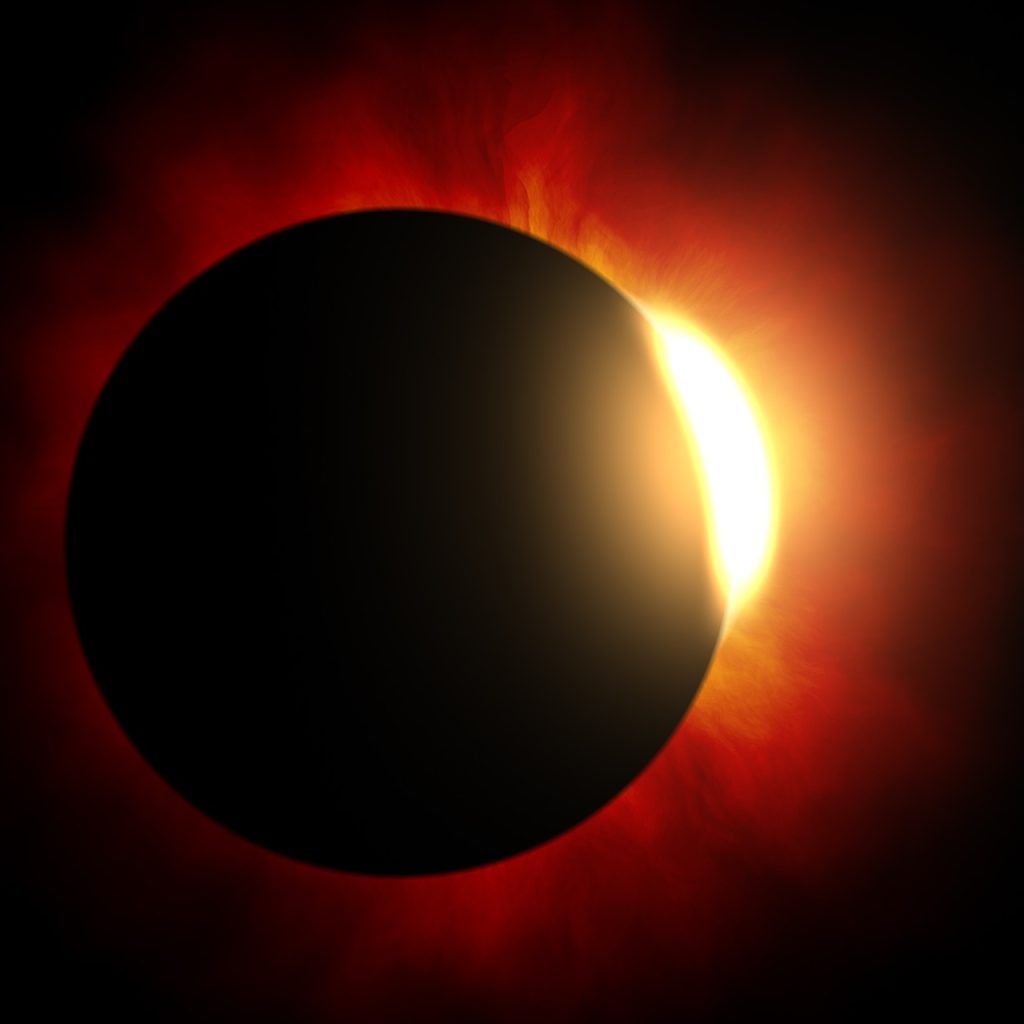
A solar eclipse is the result of a precise alignment between the Sun, Moon and Earth. Thus, the sunlight reaching the Earth is totally or partially blocked when the Moon is in the New Moon phase and its orbit places it directly between the Earth and the Sun. As a result, temporary darkness occurs during the day, either in its entirety - in the case of a total solar eclipse - or partially - if only part of the Sun is covered.
In a simple way, we can summarize solar eclipses in four phases:
- Initial contact: occurs when the Moon begins to slowly cover the disk of the Sun.
- Totality (in the case of total eclipses): it is the moment when the Moon completely covers the Sun, leaving the region in shadow and allowing the vision of the solar corona and the surrounding stars.
- Second contact: occurs when the Moon begins to move away from the solar disk, marking the beginning of the partial phase after totality.
- End of the eclipse: when the Moon moves completely away from the Sun, the eclipse ends.
Safety for observing solar eclipses
Observation of solar eclipses must be carried out safely. Thus, it is recommended that you never look directly at the Sun, since your eyesight can be seriously damaged by solar radiation. Exposure of the eyes to ultraviolet and infrared radiation from the Sun can cause damage to the retina and cornea, causing so-called solar retinopathy.
Therefore, the use of duly certified glasses for direct observation of the Sun is recommended, or the use of telescopes and their specific filters.
Solar observation glasses
Direct Sun Viewing Glasses are designed to safely filter direct sunlight and allow for comfortable viewing of eclipses.
This type of glasses They block harmful radiation, making it safe to look at the Sun for long periods of time.
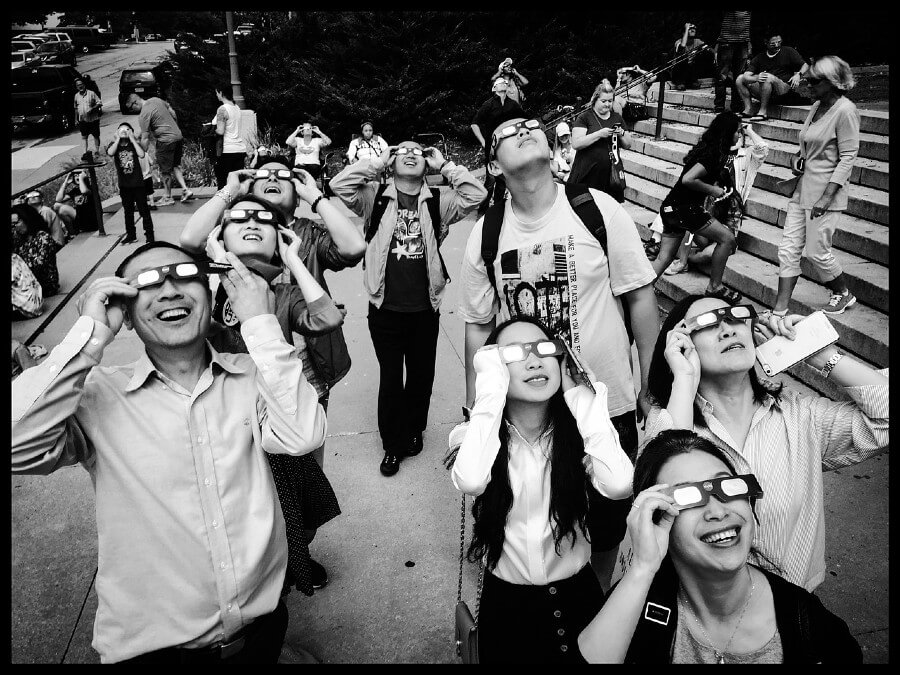
In this section we explain its operation and the applicable regulations for its certification.
How do they work?
Solar observation glasses make use of solar filters that reduce the intensity of visible sunlight and block ultraviolet and infrared radiation.

These are filters made of materials that can safely absorb or reflect sunlight, such as metallized polymer or solar glass.
Certification. Applicable regulations
For solar observation glasses to offer a guarantee of safety, they must have the appropriate certification.
In this sense, the standard is applicable to these products ISO 12312-2, Eye and face protection. Sunglasses and associated equipment. Part 2: Filters for direct observation of the sun.
Specifically, ISO 12312-2 is an international standard that establishes the requirements and technical specifications for sunglasses used for direct observation of the sun. It sets rigorous criteria for manufacturing and labeling, ensuring that products meet the necessary protection standards against harmful solar radiation.
The aspects included in the ISO 12312-2 standard are:
- Light transmission. The standard states that solar filters must adequately block harmful radiation, allowing only a safe amount of visible light for comfortable viewing.
- The filtration of ultraviolet rays. The standard states that filters and sunglasses must effectively filter ultraviolet (UV) rays to prevent damage to the cornea and retina.
- Homogeneity. ISO 12312-2 states that filters must provide uniform protection throughout their area to prevent eye damage in unprotected areas of the eyes.
- Marking and labeling. ISO 12312-2 stipulates that products complying with the standard must bear a clear marking indicating their conformity. This allows consumers to easily identify sunglasses and filters that offer this guarantee.
Other safety considerations for observation glasses
In addition, it is important to keep in mind the following safety considerations for this type of product:
- The glasses must have solar filters that block at least 99.999% of solar radiation.
- The glasses must not be damaged with scratches, holes or other types of elements that deteriorate their integrity and allow the entry of unwanted light.
- In any case, the instructions provided by the glasses manufacturer must be followed to ensure proper and safe use.
Astronomy filters
Both amateur and professional astronomers use astronomy filters, which allow detailed observation of celestial bodies.
Now, to obtain accurate results, it is necessary to properly calibrate and test these filters. In this section, we will talk about the importance of calibration and testing, as well as how these processes are carried out.
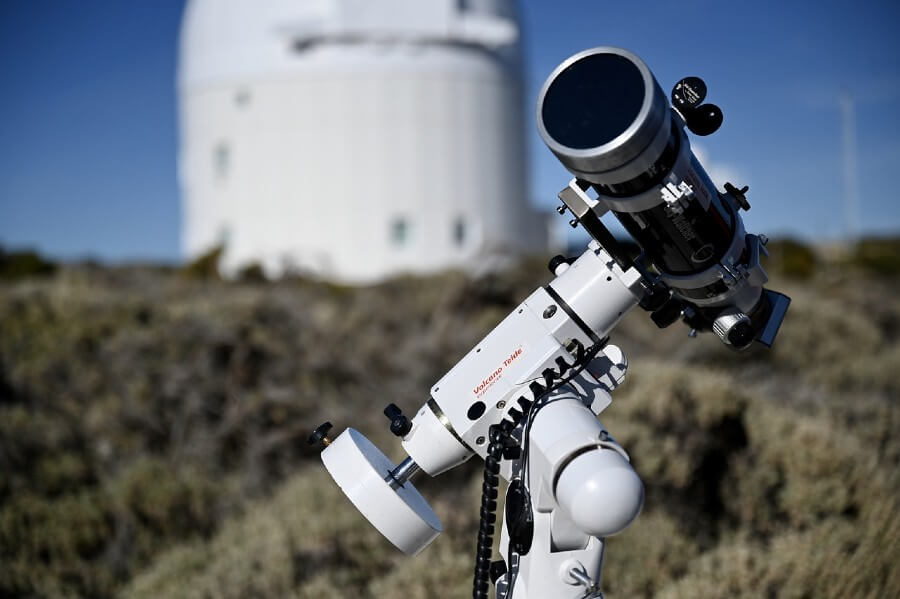
Calibration
Calibrating an astronomy filter allows you to determine its exact spectral response and how it affects the light passing through it.
Filter calibration is crucial to ensure measurements are accurate. So an adequate calibration of the filters can determine whether or not distortions occur in the astronomical information, which affects the quality of the observation.
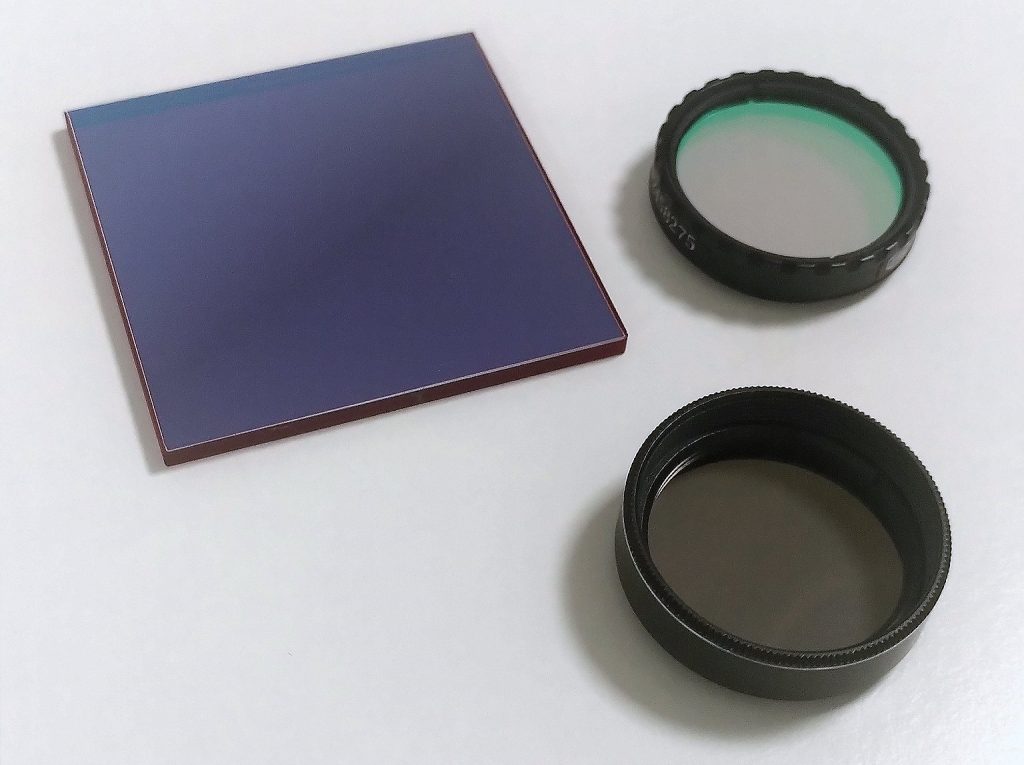
Astronomy filters can be calibrated by spectrophotometry or through comparison with reference sources.
Regarding calibration by spectrophotometry, it is carried out by measuring the spectral transmittance of the filter in a certain range of wavelengths. With these measurements the transmittance profile of the filter is determined and its accuracy can be checked in relation to the specific wavelengths of interest.
Regarding calibration by comparison with reference sources, it is carried out by comparing the filters with known reference sources. These references can be, for example, calibration lamps or reference stars with well-defined spectra. Thus, this comparison helps adjust the filter so that its spectral characteristics match the reference sources.
Testing
In addition to calibrations, it is recommended to test the filters periodically in order to verify their performance and ensure that they meet the desired specifications.
Some of the tests that are usually carried out on astronomy filters are the following:
- Spectral transmittance. It consists of measuring the transmittance of the filter as a function of wavelength. This is a critical test to ensure that the filter allows light of the wavelengths that you want to study to pass through, or that the filter adequately blocks unwanted wavelengths.
- Transmission profile. This test verifies that the filter has a well-defined and smooth transmission profile, that is, the profile does not present abrupt peaks or valleys.
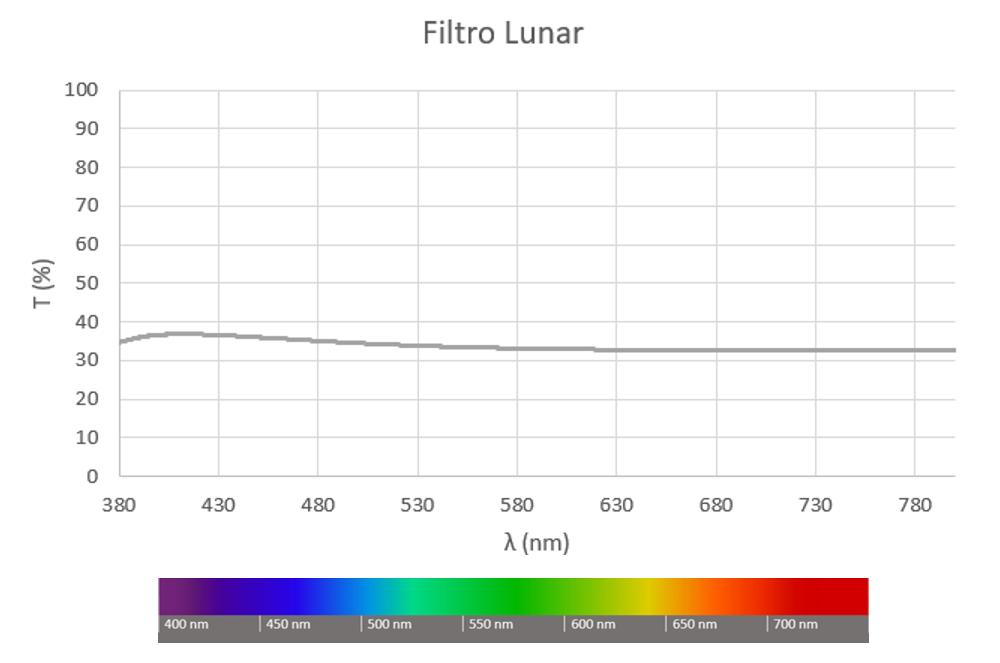
- Transmission uniformity. This test allows you to verify that the spectral transmission of the filter is uniform at different points of the filter.
- Radiation resistance. It consists of exposing the filters to radiation levels from space or Earth (for example, direct sunlight). The goal is to verify that the filters can withstand extreme conditions without significant degradation. To do this, measuring transmittance before and after exposure to different levels of radiation will determine the level of degradation.
- Thermal stability. To carry out this test, the filter is subjected to temperature cycles and it is verified if it maintains its optical performance in a range of temperatures.
- Specific spectral characteristics. For specialized astronomical applications, such as the detection of specific absorption lines or the observation of certain celestial objects, specific tests can be performed to determine whether the filter meets the precise requirements of those observations.
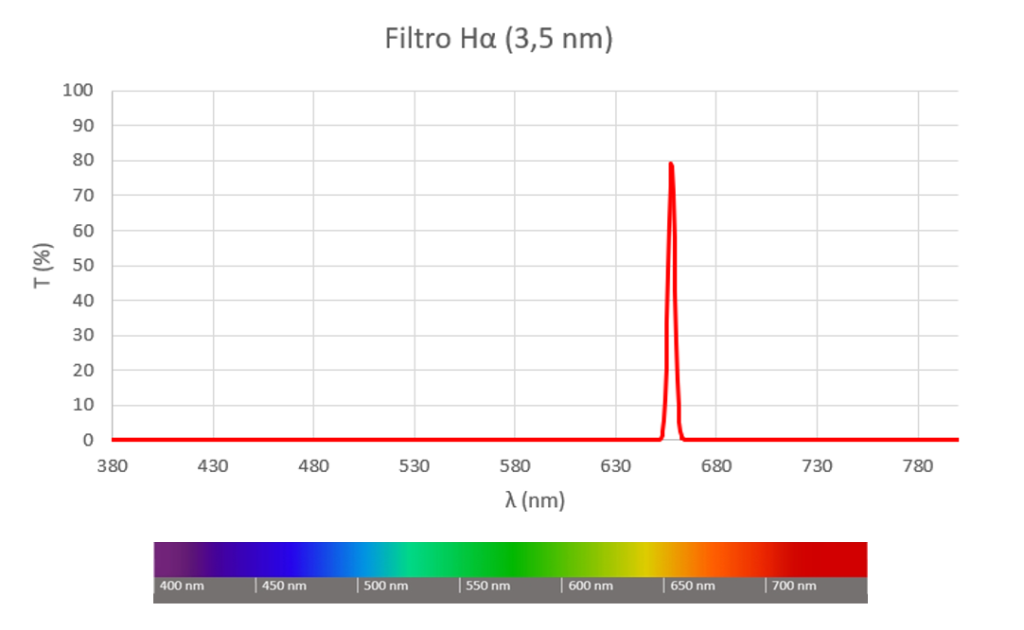
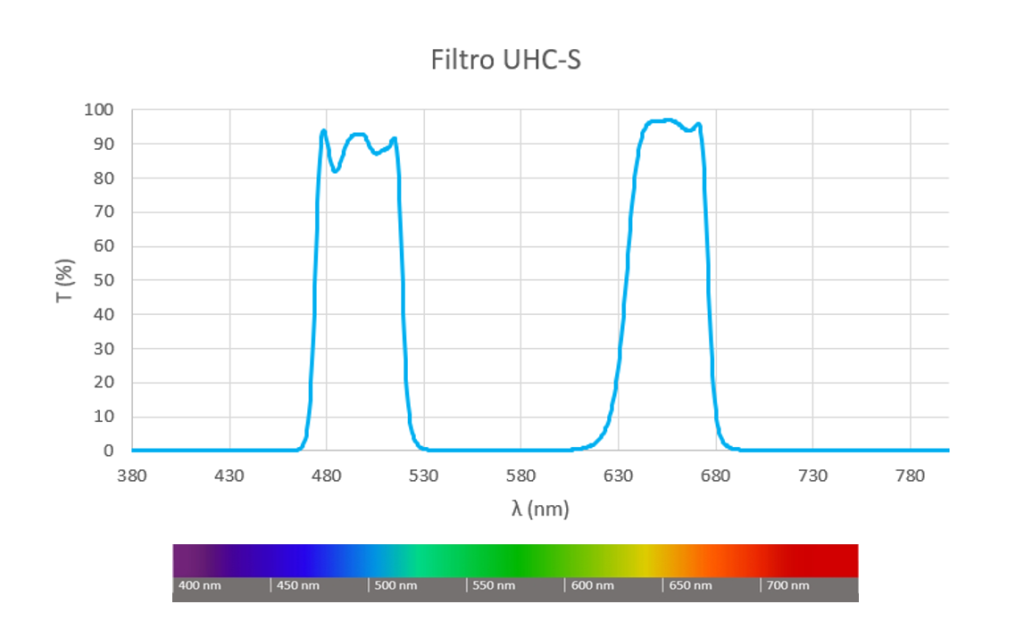
Now, it should be noted that these tests may vary depending on the type of filter and the manufacturer. Thus, the tests would be different in narrowband filters for the observation of specific spectral lines, than in broadband filters for general astrophotography.
In the process of manufacturing and selecting filters for astronomy, these tests, carried out rigorously, are essential, since astronomers and observatories usually use high quality filters to obtain accurate and reliable data.
Eyco
Eyco conducts trials in sunglasses for direct observation of the Sun, according to ISO 12312-2, and astronomy filters.
In addition, Eyco carries out calibrations of astronomy filters using spectrophotometry, as well as different testing tests.
At Eyco, we are experts in calibrating and testing the optical properties of materials. Our expert team has experience in calibrations and tests that comply with national and international standards.
FAQ
Why is it dangerous to look at a solar eclipse without proper protection?
Looking directly at the sun, even during an eclipse, can cause irreparable damage to the retina known as solar retinopathy or eclipse blindness. Intense visible solar radiation, along with ultraviolet (UV) and infrared (IR) rays, can burn the eye's photosensitive cells without immediate pain being felt.
What is the ISO 12312-2 standard for solar observation glasses?
The legislation ISO 12312-2 It is the strict international standard that regulates filters and glasses for direct observation of the sun. This certification guarantees that the product reduces visible light to safe levels (between 0.00022% and 0.0032%) and almost completely blocks harmful UV and IR radiation.
How can you verify if sunglasses actually comply with the ISO 12312-2 standard?
The authenticity of the filters is verified through technical tests in specialized laboratories. Through the spectrophotometryThe exact percentage of light transmittance is analyzed across the entire range of the electromagnetic spectrum to ensure that the material is homogeneous and safe for the human eye.
Why is it critical to calibrate and test astronomy filters on telescopes?
Poorly calibrated astronomical filters can introduce optical and data distortionsby altering the light intensity or colors of the celestial bodies being studied. Periodic testing ensures maximum scientific accuracy in the observations and protects the sensitive digital sensors of the instruments from overheating.
What services does Eyco offer for the astronomical and optical sector?
Eyco has the technical expertise to carry out the calibration and testing of optical filters through spectrophotometry. This ensures that both manufacturers of protective equipment and professional astronomers have traceable and reliable measurements that meet the most demanding quality standards.